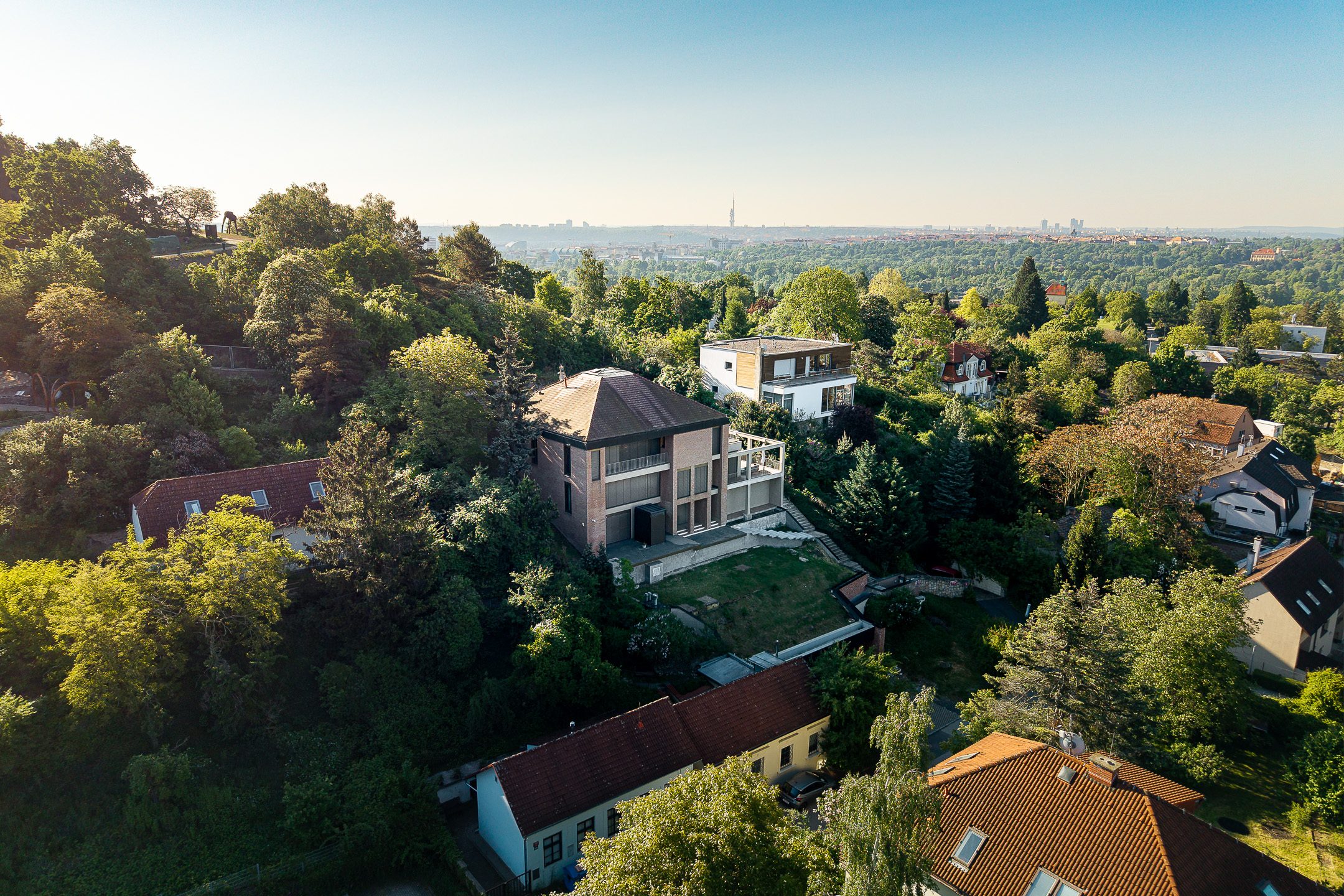
Working with an estate agent on a premium property: what to expect
With a premium property, it is not only who offers it that matters, but how. We outline what to look for when choosing an agent, how to set up the working relationship and what to keep an eye on, whether you are selling or buying.

A premium property is not usually sold or bought quickly. There are fewer buyers, each has different expectations, and negotiations often take place discreetly. The quality of your working relationship with the agent therefore affects not only the outcome, but also how smoothly the whole process runs.
This text is a practical overview for both sides: for those who are selling and for those who are searching. It is not a list of rules, but of questions that are worth asking yourself right at the start.
Why the agent's role is different with premium properties
With an ordinary flat, the deal rests mainly on price, layout and location. With a villa, an exceptional loft or a house by the sea, things that are hard to describe in a listing also play a part: the light during the day, privacy, technical facilities, the overall atmosphere of the house.
The agent is therefore not just an intermediary. They must know the property well, be able to explain it and judge who it is right for. This determines how it will be presented, to whom it will be offered and how the negotiations will go.
In this part of the market, it is also common for the price not to be public and to be disclosed only on request. Contact with the agent is then the first real step, not a formality before signing.
What to look for when choosing an agent
Experience in this segment cannot be replaced by general property knowledge. At the first meeting, it helps to focus on a few things:
- Knowledge of the location. Does the agent know what distinguishes individual districts, streets or developments? Do they understand what buyers in that place expect?
- Access to clients. Do they work with a circle of prospective buyers who are genuinely looking for premium properties, or do they rely only on public advertising?
- Approach to discretion. How do they handle information about the owner, address or price? How do they vet prospective buyers before allowing them to view?
- A concrete plan. Can they describe how they will proceed in the first weeks, rather than merely promise a result?
- Honesty. Will they tell you unwelcome things too, for instance that some expectation is not realistic?
A good sign is when an agent asks more than they talk. Questions about the history of the house, its technical condition, the reason for sale or the timeframe show that they want to understand the property.
How to set up the cooperation when you are selling
At the start, it pays to write down what you expect from the sale. Not only the price, but also the time horizon, the degree of discretion and an idea of who the buyer should be.
Then clarify with the agent:
- Scope of services. What exactly do they provide: presentation, marketing, viewings, negotiation, coordination with a lawyer? You will find an overview of what we offer on the Services page.
- Form of cooperation. Whether it is an exclusive or a non-exclusive agreement, you should understand what it means for you and for the agent.
- Communication. How often and in what form will you receive updates on interest, viewings and feedback?
- Documents. Which documents need to be prepared in advance: an extract from the land registry, building documentation, inspection reports, an energy performance certificate and so on?
The better the property is documented, the fewer uncertainties arise at a later stage of the negotiations. Serious buyers ask about documents early and see the seller's preparedness as a sign of trustworthiness.
How to set up the cooperation when you are buying
Buyers often regard the agent as a representative of the other side. With premium properties, however, good communication with the agent helps them too. The more precisely you describe what you are looking for, the better the agent can offer you even what has not yet been publicly advertised.
It is useful to say:
- which locations are under consideration and which are not,
- what is essential for you and what is merely a pleasant extra,
- whether it is for your own residence, a second home or an investment,
- within what time horizon you want to decide,
- how you will finance the purchase.
The agent can then filter better, and you do not have to go through offers that do not match your wishes. For initial orientation, you can browse the current property listings, but it is better to discuss specific wishes in person.
During a viewing, do not hesitate to ask about technical details, running costs, the state of the documentation or what would need to be completed. A reputable agent will answer, or find the answer from the seller.
What to avoid
Some mistakes recur regardless of the type of property:
- Choosing on the biggest promise. An agent who promises a price well above reality is often just winning the instruction. The sale then drags on and the property loses appeal on the market.
- Offering through many channels without coordination. When the same house appears in different forms and with different information, it makes buyers uneasy.
- Poorly defined communication. If you do not know what is going on, distrust grows on both sides.
- Underestimating legal and technical preparation. An unresolved easement or missing documentation can delay even a deal that is otherwise going smoothly.
- Pressure for a quick decision. With a property of this type, both buyer and seller should have room to think things over.
Cooperation between agents and partners
The premium market is relatively small and relationships play a major role in it. Buyers come through various agents, advisers, architects or lawyers. It therefore makes sense for an agent to be able to cooperate with colleagues from other agencies, and not merely compete.
For the seller, this means a wider circle of potential buyers without the property having to be offered publicly. For the buyer, it means access to offers they would not find on their own.
At NeNe Exclusive Properties, we regard this cooperation with estate agents and partners as a normal part of our work, whether the properties are in Prague, on the Costa Brava or in Dalmatia. We describe the terms on the Cooperation page.
In conclusion
A good working relationship with an agent does not rest on a single decision, but on ongoing trust, clear rules and open communication. It pays to devote time to the choice and the setup at the start; it will spare you uncertainty later.
If you are considering selling or are looking for a premium property and would like to talk through the next steps without obligation, get in touch via the Contact page.