Seaside Villa: Practical Questions on Remote Management
A seaside property requires care even when no one is living in it. We present an overview of areas worth considering when managing a house from a distance, and questions worth asking beforehand.
A seaside villa is for many owners a place to spend part of the year. The rest of the time the house stands elsewhere, away from where the owner lives. Remote management is therefore not a marginal issue, but part of the decision to buy. Below we summarise the areas worth considering and questions worth asking beforehand.
This text is general in nature. Specific obligations, contractual conditions and tax or legal matters always need to be verified with local advisers.
Who Looks After the House When You're Not There
The foundation is a clearly defined person or company that looks after the house. It helps when there is one point of contact, not several suppliers, each of whom knows only about their part.
It is worth clarifying:
- who has the keys and who is allowed to enter the house,
- how often an inspection will be carried out,
- in what form you will receive a report (photographs, a short written record),
- who decides on minor repairs and to what extent you must approve them in advance.
It is good to have the rules written down. This will make cooperation easier, even if the person managing the property changes.
Equipment and Seasonal Operation
A house in a seaside environment is exposed to sun, moisture and salt in the air. A prolonged period without use can reveal weak points that would have become apparent sooner during normal operation.
Practical points for regular inspection:
- plumbing and electrical installations after a prolonged shutdown,
- air conditioning and ventilation to prevent moisture accumulating in the house,
- roof, terraces, windows and outdoor elements,
- garden and irrigation.
It is useful to draw up a calendar of activities for the house: what is done before the season, what after it, and what when closing the house for an extended period.
Pool, Terraces and Outdoor Equipment
Equipment that makes seaside life pleasant requires regular care. This particularly applies to the pool. For houses with an infinity pool, hot tub and several terraces, managing technology and maintaining surfaces is a chapter in itself.
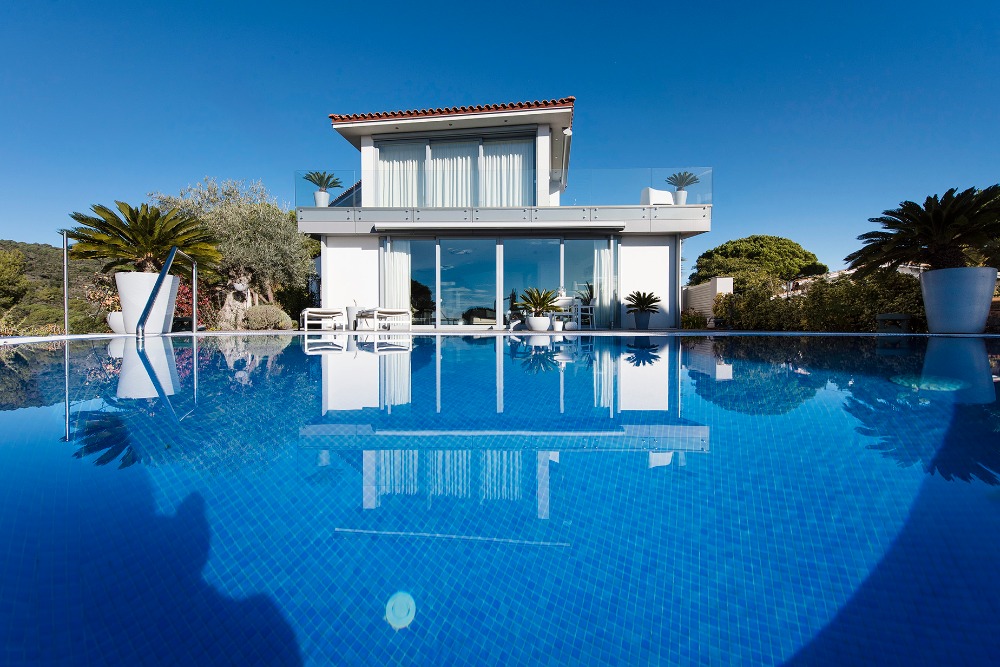
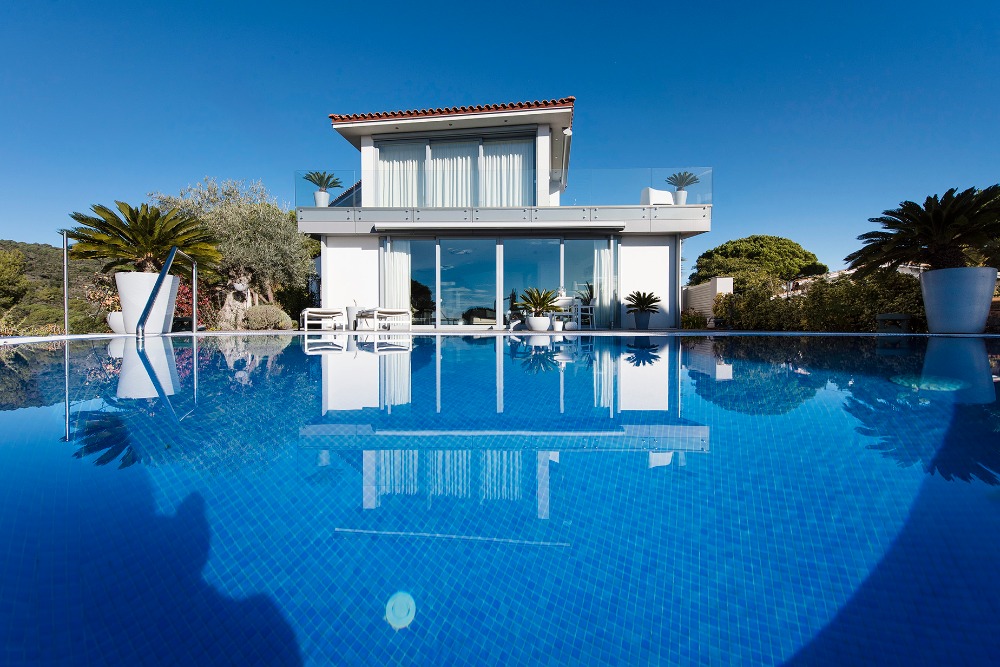
An example can be found in the villa near Tossa de Mar on the Costa Brava. According to the information provided, it has 343 m², 5 bedrooms, 4 bathrooms, an infinity pool, a hot tub, a garage for 3 vehicles, an outdoor grill, several sunny terraces, a home fitness centre, a children's play area and a security system. A house equipped in this way has more elements that need to be maintained, and when planning management it is good to account for them separately.
When selecting a service company, ask:
- whether they have experience with the given type of pool and equipment,
- how they handle complaints and breakdowns outside normal working hours,
- whether the price of services is clearly described in advance.
Security and Insurance
An empty house requires a different approach to security than an occupied one. A security system is useful, but it only works reliably if there is someone to respond to its signals.
It is worth thinking about:
- who is contacted in case of alarm and in what order,
- how the garage, terraces and outdoor areas are secured,
- what exactly the property insurance covers and what conditions it sets for the period when the house is unoccupied.
Read the insurance contract terms carefully or discuss them with an insurance adviser. With unoccupied houses in particular, details can be important for the payment of claims.
Administration, Communication and Daily Details
Remote management is not just about technology. It also includes payments for utilities, fees and other obligations associated with ownership. In Spain, as in other countries, the rules vary depending on the specific situation, so it is sensible to have a local adviser who can guide you through current requirements.
A few principles help:
- keep all documents relating to the house neatly stored in one place, including in digital form,
- keep a record of repairs and service work,
- communicate with suppliers in writing and in a language both parties understand well,
- take into account that some matters may require your physical presence or power of attorney.
It is also worth setting a maintenance budget and asking the manager to estimate in advance which items are recurring and which are one-off.
What to Ask Before You Buy
The method of management is worth considering even during the viewing. A house with a larger amount of technology and outdoor areas will require a different regime than a smaller building. The distance from the town, the availability of tradespeople and the seasonality of the place also affect how easily day-to-day operations can be maintained.
Before making a decision, you can ask:
- what is the technical condition of the house and when were major repairs last carried out,
- which parts require regular servicing,
- who in the area manages similar houses,
- how often you will actually use the house.
If you are considering a seaside property, we would be happy to go through the offer with you in the Properties section and help you find your way around the practical questions associated with buying. You can also find an overview of our activities on the Services page. If you would like to discuss the matter in person, contact us via contacts.