Cubist Architecture in Prague and Living in Cubist Houses
Cubism in Prague was not limited to painting, but extended to architecture and design. We looked at what makes cubist houses special, how it is to live in them, and what to consider when choosing an apartment.
Prague is associated with Gothic, Baroque and Art Nouveau. It is less well known that it belongs to places where cubism extended from canvas to architecture. Such houses are a rarity in the European context and are characteristic of Prague.
In this article we look at what characterises cubist architecture, how it is to live in such houses and what to consider when you are thinking about an apartment in a historic house.
What makes Prague cubism special
Cubism is originally an art movement that breaks down objects into planes and edges. Czech architects and designers attempted to apply the same principle to building: on façades, in window divisions, in staircases and in small details.
Typical features are usually these:
- broken planes of façades that appear as crystalline or prismatic shapes,
- pronounced plasticity – light and shadow change during the day and the façade thus "works",
- geometric detail in railings, portals, cornices and other elements,
- striving for wholeness – architecture, interior and sometimes also furniture were created with regard to the same artistic language.
For residents this does not mean only aesthetics. A house with a distinctive shape is easily recognised in the surrounding buildings and gives the district character.
How to live in a cubist house
Historic houses have their specifics. Layouts did not emerge according to modern ideas about open space and the proportions of rooms may also be different from what we are used to from new buildings. For many people this is precisely the reason why they choose such living.
At the same time, it is necessary to account for the fact that:
- every apartment is different – you cannot rely on a standardised solution,
- technical equipment is often subject to renovation, so it is important to know what has already been renewed,
- changes to the layout may be limited, especially if the house is under monument protection or subject to rules of the community of owners.
In general, the more historic character the house carries, the more carefully you need to verify the legal and structural aspects before purchasing.
Example from the centre: apartment next to Pařížská Street
A concrete example is a luxury apartment in a cubist house next to Pařížská Street on the border of Eliášova and Krásnohorská streets in Prague's Old Town. It is a historic cubist house near Pařížská Street and the Fairmont Prague hotel.
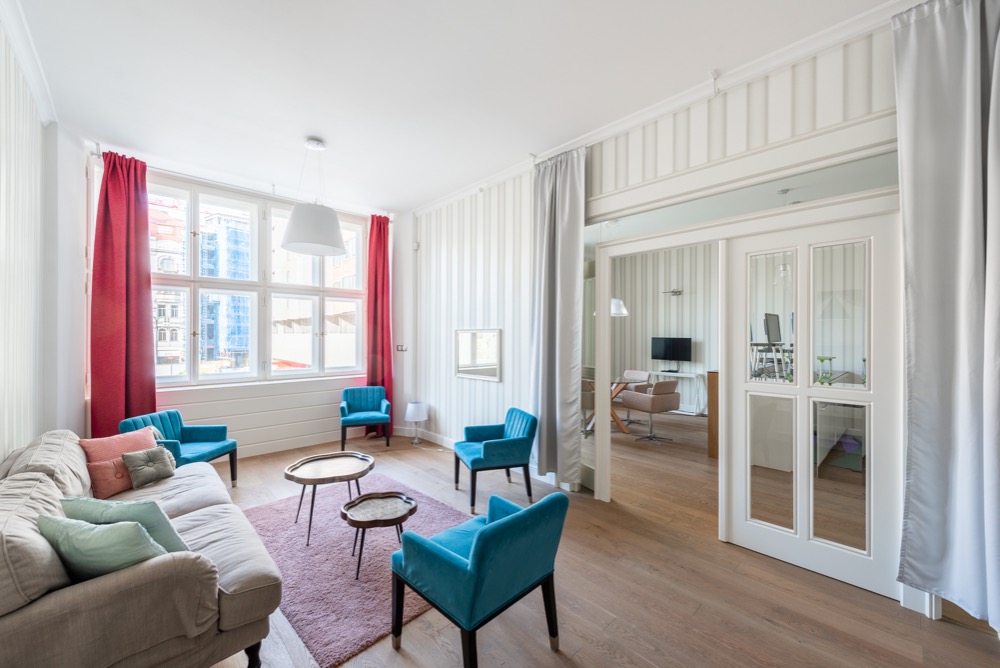
The apartment has 105 m², two bedrooms and one bathroom. According to the records it underwent complete renovation in 2024. From the equipment it is worth noting:
- underfloor heating with its own gas boiler,
- quality oak floors,
- designer kitchen with built-in appliances,
- large bathroom with sauna,
- possibility of conversion, through which another bedroom would be created.
Interesting is how a historic house meets modern facilities in such an apartment. The building envelope bears the original architectural expression, the interior meets today's requirements for daily operation. However, any potential conversion should always be discussed with specialists and with regard to the house rules.
The price is listed "on request". We would be happy to provide more details during personal contact.
What to focus on when choosing
If cubist architecture appeals to you, it helps to clarify several things beforehand:
- Condition after renovation. Find out what was renewed and to what extent – installations, heating, floors, bathroom.
- Layout and light. In historic houses it is worthwhile to view the apartment at different times of day.
- Possibilities for modifications. If you are considering a change in layout, ask about it beforehand and do not rely on assumptions.
- Surroundings. Location in the centre means proximity to services and cultural life, but also the bustle typical of a frequented part of the city. Judge whether it suits you.
- Relationship to the house. A cubist house is bought somewhat also for its story and appearance. It should make sense to you long-term.
Alternative: another type of urban living
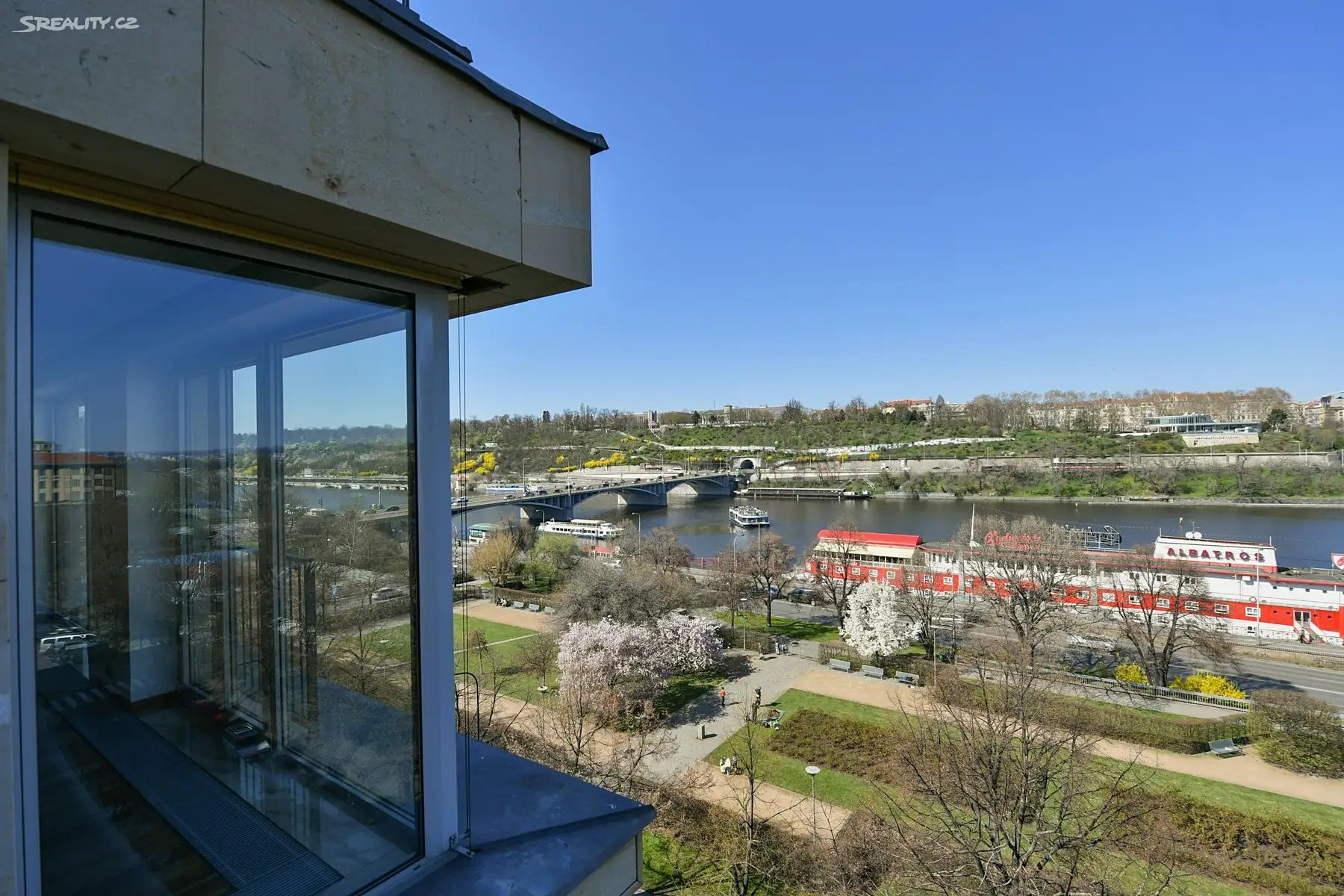
Not everyone likes a historic house. Anyone looking for modern standard and a city view can look at, for example, a family apartment on Lannova Street in Prague 1. It has 192 m², a layout of 4+kk, two terraces, air-conditioned interior and a garage with two spaces. It is a different living philosophy, but also in the city centre.
A wider selection can be found in the section real estate. Prague offerings range from city apartments to villas in outlying areas of the city.
Conclusion
Cubist architecture is one of the less common chapters of Prague. Living in such a house requires a bit more attention when choosing, but can offer an environment with distinctive character. It is important to look at the apartment realistically: at its condition, layout and house rules.
If the topic interests you or you want to discuss a specific apartment, you can contact us via the Contacts page. We would be happy to discuss with you what you are looking for and arrange a viewing.