Brownfields in Prague: How Industrial Zones Become Neighbourhoods
Abandoned factories, warehouses and depots are often transformed into mixed neighbourhoods in European cities. We offer a general perspective on how brownfield transformation occurs and what to pay attention to when considering living in such a location.
Cities grow in two ways: outwards on undeveloped land, or "inwards", by using territory that once served another purpose. It is precisely this second approach that deserves attention with brownfields – former industrial, storage or transport sites that have lost their original function.
This article offers a general perspective. It is not an overview of specific Prague projects nor a market assessment, but rather a way of looking at such neighbourhoods.
What is a Brownfield and Why is it Discussed
A brownfield is a previously used parcel or site that today stands unused or only partially used. This typically includes former factories, warehouses, barracks or railway and freight yards.
The reason for interest is straightforward. Such sites often lie close to the urban core, have existing transport connections and are usually contiguous. Their transformation allows the city to be completed without further expansion at the edges.
At the same time, these are territories with history, which often reflects in the resulting neighbourhood: in street names, in preserved halls or chimneys, and in the character of the development.
How Transformation Generally Occurs
The transformation of an industrial zone is not a one-off step. It typically consists of several phases:
- Site Preparation – assessment of land condition, possible remediation and decisions on what original buildings to retain.
- Planning – determining the proportion of residential, service, office and public spaces, coordination with transport and technical infrastructure.
- Phased Construction – the neighbourhood is typically completed in stages, sometimes over many years.
- Population – only with the arrival of residents does it become clear whether the neighbourhood actually works: shops, nurseries, greenery, daily rhythm.
This is why living in a transformed zone differs from living in a long-established neighbourhood. Buyers often enter a place that is still taking shape.
What to Look for Before Deciding
A transformed site is neither better nor worse than any other location. However, it requires somewhat different questions. A practical list:
- Site History. How the site was previously used and whether necessary preparation or remediation took place. This information should be verified in documentation and with specialists, rather than relying on impressions from a viewing.
- Master Plan and Overall Concept. What is to be developed nearby and in what order. A partially built neighbourhood can mean construction activity for some time.
- Public Space. Streets, greenery, meeting places. A finished building does not yet make a finished neighbourhood.
- Community Facilities. When and to what extent will services and facilities for daily life be developed.
- Transport. Access to the centre and connection to existing networks, verified in real-time throughout the day, not just on a map.
Considerations about noise and surrounding traffic are a separate matter and should be assessed separately when choosing a specific flat.
Industrial Heritage and Loft Living
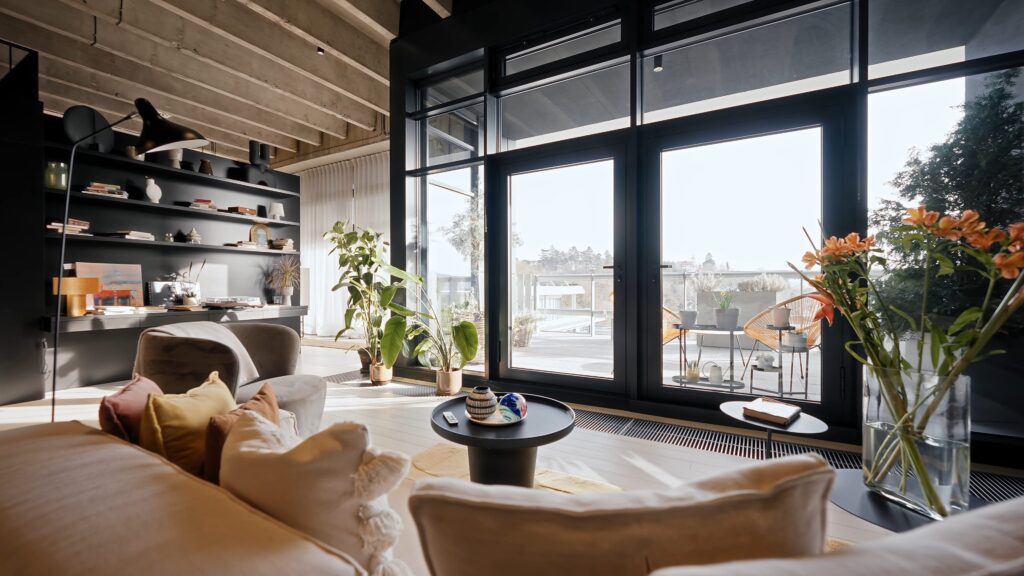
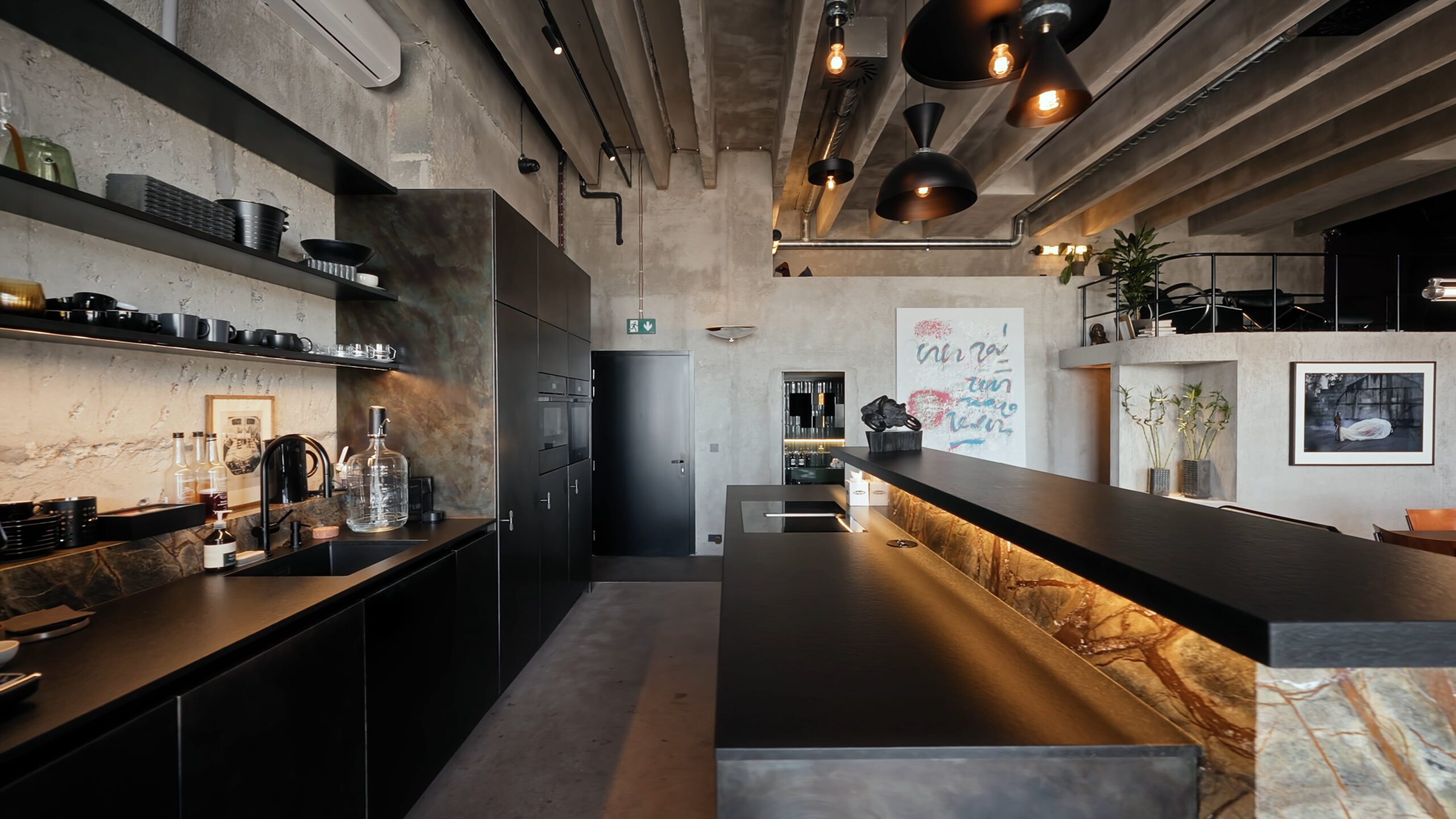
Brownfields are associated with the idea of lofts: high ceilings, large windows and open layouts. However, not every conversion has this character. Some new neighbourhoods are created entirely from new construction and merely reference industrial aesthetics.
In NeNe's portfolio, you can find, for example, a premium 3+kk loft with an area of 99 m² in Vanguard Modřany. Based on the information available to us, it is connected to a community concept: it includes membership in the Vanguard community, a private wellness centre with a pool, fitness, cinema hall, multipurpose room, concierge services and a roof terrace. However, we do not attribute its origin to an industrial site. These are exactly the kinds of questions – what used to be on the site – that are always better asked directly and answered from verified sources.
The example shows a more general trend: in new neighbourhoods, residential accommodation is often complemented by shared spaces and services that an individual flat could not offer alone. Who this model suits depends on how people live and how much shared facilities they prefer.
The Role of the Developer and Project Communication
The transformation of a large territory is a long-term task, and its outcome is influenced by how clearly the concept is presented. Buyers need to know what is completed, what is in preparation and what is still only a plan.
It therefore makes sense for the developer to communicate transparently and rely on concrete information rather than general slogans. NeNe also works in marketing and sales for developers, including marketing management, diagnostics and online advertising. We present projects according to the NeNe Standard, with emphasis on quality photography, video and printed materials that factually show what a given property offers.
For prospective residents, this is practical: well-prepared materials make it easier to compare newly emerging neighbourhoods with established locations.
Brownfield or Established Neighbourhood?
The decision is not a matter of right or wrong, but of priorities. An established neighbourhood offers experience: it is clear how it functions throughout the year and day. A transformed industrial zone often offers newer construction and a more thoughtful concept, but requires patience and a willingness to observe how the surroundings develop.
When considering, it can help to compare several locations on-site, ideally at different times of day. You can find a current overview of premium houses and flats in our property portfolio.
If you are considering living in Prague and would like to discuss which type of location suits your needs, we would be happy to explore options with you. Simply get in touch via our contact page, by email at info@nenem.cz or by phone on +420 608 486 486.